
Kolkata for First-Time Visitors: 10 Places Where Time Stands Still
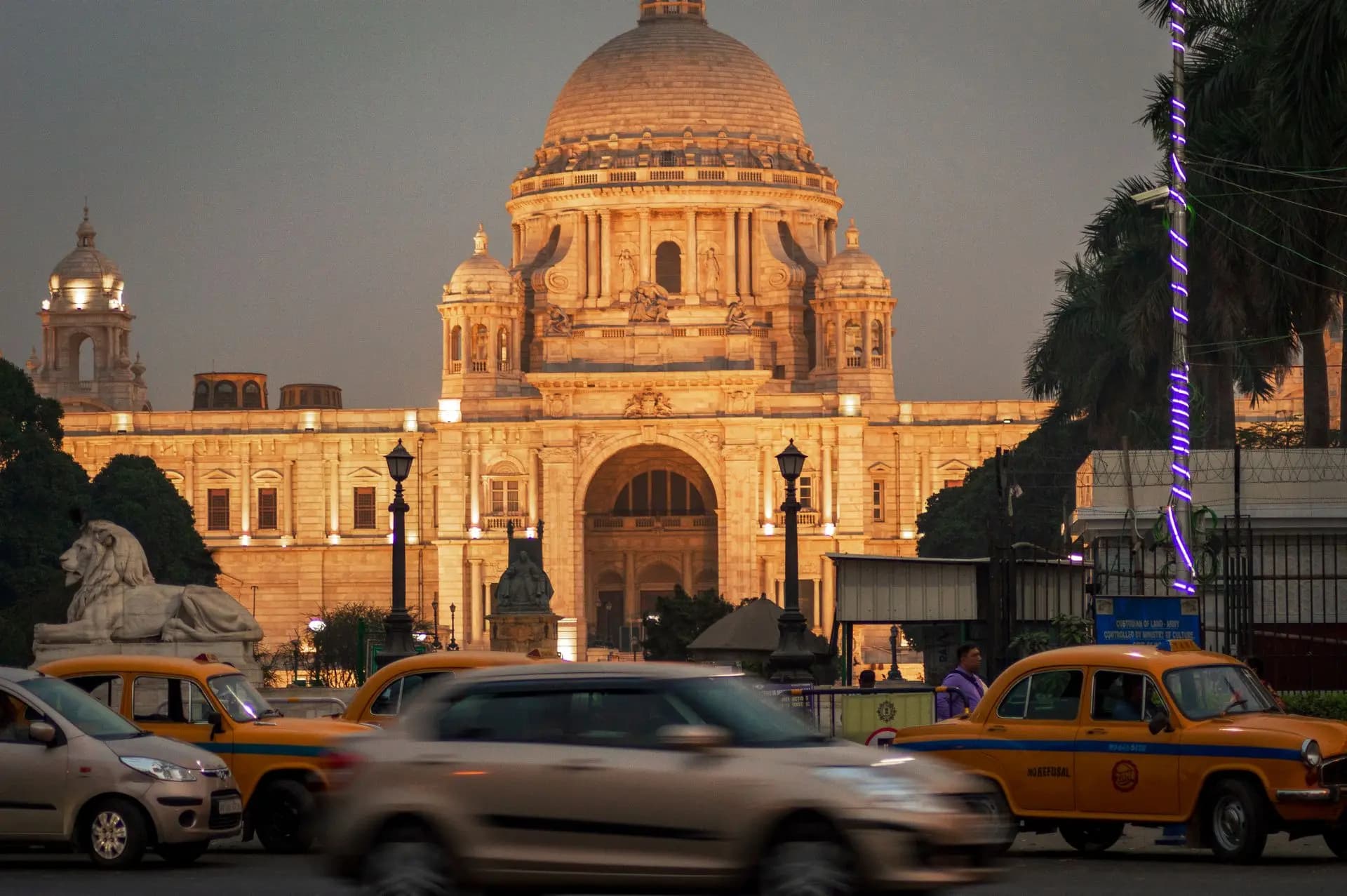
Plan your first trip to Kolkata with 10 must visit places where history lives on, from Victoria Memorial to Princep Ghat, plus Bengali phrases to use at every stop.
Few cities have shaped a nation's imagination the way Kolkata has. For well over a century it was the capital of British India, and it became the stage where modern India began to think, write and argue for itself. The Bengal Renaissance gave the country reformers, scientists and poets, and Rabindranath Tagore carried Bengali literature to the world when he won the Nobel Prize in 1913. The same lanes and lecture halls nurtured the Swadeshi movement, the secret societies of young revolutionaries, and leaders such as Subhas Chandra Bose, while two songs that became national symbols both have Bengali roots. Walk through Kolkata today and that history has not faded into museums. It lives on in tram bells, riverside ghats, crumbling rajbaris and the smoky chatter of College Street's coffee house. This is a city where time seems to stop, and where a few words of Bengali can turn a sightseeing trip into a conversation with the past.
This guide picks ten places every first-time visitor should see. For each one you get a little history, a practical tip and a Bengali phrase to use on the spot.
At a Glance
| # | Place | Area | Best time | Time needed |
|---|---|---|---|---|
| 1 | Victoria Memorial | The Maidan | Morning or late afternoon | 2-3 hours |
| 2 | Howrah Bridge and Mullick Ghat | Hooghly riverfront | Dawn to early morning | 1-1.5 hours |
| 3 | Dakshineswar Kali Temple | North, on the river | Early morning | 2-3 hours |
| 4 | Princep Ghat | Strand Road | Late afternoon to sunset | 1-2 hours |
| 5 | Jorasanko Thakur Bari | North Kolkata | Late morning or afternoon | 1.5-2 hours |
| 6 | College Street and Indian Coffee House | Central-north | Afternoon | 2 hours |
| 7 | Kumortuli | North Kolkata | Morning to midday | 1 hour |
| 8 | St. Paul's Cathedral | The Maidan | Morning | 1 hour |
| 9 | A ride on the Kolkata tram | Esplanade | Daytime | 1 hour |
| 10 | South Park Street Cemetery | Park Street | Morning | 1 hour |
1. Victoria Memorial: The Marble Memory of an Empire
The foundation stone was laid in 1906, and the white marble hall opened to the public in 1921. By then the capital had already moved to Delhi, so the monument was finished for a city that was no longer the seat of power. Today it is a museum set in wide gardens, and a bronze figure of Victory stands on top of the dome.
- What to see: The galleries on Calcutta's history, the portrait and royal collections, and the gardens in the golden hour.
- Good to know: The museum is closed on Mondays and photography is not allowed inside the galleries. The gardens keep longer hours than the museum. Seasonal evening light-and-sound shows run, so check the official site for timings and tickets.
Say it in Bengali: এই জায়গাটা খুব সুন্দর। Ei jayga-ta khub shundor. (This place is very beautiful.)
2. Howrah Bridge and Mullick Ghat: The Gateway of the City
Howrah Bridge opened on 3 February 1943 and replaced an older floating bridge. When it was built it ranked among the longest cantilever bridges in the world. It was officially renamed Rabindra Setu in 1965, but almost nobody uses that name in daily talk. Beneath it, Mullick Ghat is one of the city's oldest and busiest flower markets.
- What to see: Marigold garlands piled high, boats on the river, and the steel lattice of the bridge against the dawn sky.
- Good to know: Go early. The market is liveliest in the first hours of the day, and crowds and traffic build up fast. Keep your bag close and your camera ready, but be polite when photographing vendors.
Say it in Bengali: এটা কত? Eta koto? (How much is this?)
3. Dakshineswar Kali Temple: Faith on the Riverbank
Rani Rashmoni, a wealthy widow from Calcutta, founded this temple, and the idol of Goddess Bhavatarini was installed on 31 May 1855. The temple follows the nine-spired navaratna style of Bengal and sits beside twelve Shiva shrines along the Hooghly. It is also linked to the saint Ramakrishna, who served here as a priest.
- What to see: The main temple, the row of Shiva shrines, and the bathing ghat. Many visitors pair it with Belur Math across the river.
- Good to know: Dress modestly, expect to deposit footwear and bags, and avoid weekends if you dislike long queues. Timings change with the season, so check before you go. For another temple that the city visits at the start of the Bengali new year, see our Poila Baisakh guide.
Say it in Bengali: মন্দির কখন খুলবে? Mondir kokhon khulbe? (When will the temple open?)
4. Princep Ghat: A Quiet Corner by the Hooghly
The Palladian porch here was built in memory of James Prinsep, the scholar who helped crack the ancient Brahmi script. The ghat dates to the 1840s, and in its early years it served as a grand landing point for official visitors arriving by river. A long, landscaped riverfront promenade was added in 2012, and it has become a favourite evening spot for locals.
- What to see: The memorial, the river views with Vidyasagar Setu in the distance, and the evening lights.
- Good to know: This is the most relaxed stop on the list. Come at sunset, try a boat ride, and sample the snacks sold by the stalls. It is also a useful point to catch a ferry across the river.
Say it in Bengali: চল, নদীর ধারে বসি। Chol, nodir dhare boshi. (Let's go sit by the river.)
5. Jorasanko Thakur Bari: Where Tagore Lived
This red mansion in North Kolkata is the ancestral home of the Tagore family. Rabindranath Tagore was born here and spent much of his life in this house. Part of it now houses the Rabindra Bharati Museum, and the university founded here in 1961 continues the family's love of music, dance and drama.
- What to see: The family galleries, the preserved room where the poet spent his last days, and the courtyard.
- Good to know: The museum is closed on Mondays and public holidays, and photography is not allowed inside. Allow time to walk around slowly.
Say it in Bengali: এই বাড়িতে রবীন্দ্রনাথ থাকতেন। Ei bari-te Rabindranath thakten. (Rabindranath used to live in this house.)
6. College Street and Indian Coffee House: The Town of Books
College Street, known as Boi Para (Book Town), is a long stretch of stalls and shops sandwiched between old academic institutions such as Presidency University, the University of Calcutta and Sanskrit College. Upstairs on Bankim Chatterjee Street, the Indian Coffee House has hosted generations of students, writers and film-makers over cups of coffee. Its building began life as Albert Hall in 1876. In our posts on Ishwar Chandra Vidyasagar and Sukumar Ray, you can read about two figures who shaped this world of ideas.
- What to see: Tunnels of second-hand books, tiny publishers, and the high-ceilinged coffee hall.
- Good to know: Bargaining is normal at the stalls. Come in the afternoon and give yourself time for adda, the art of the long, relaxed chat.
Say it in Bengali: এক কাপ কফি দিন। Ek kaap coffee din. (One cup of coffee, please.)
7. Kumortuli: Where Gods Are Made from Clay
Kumortuli, once spelt Coomartolly, is the potters' quarter of North Kolkata. In the early colonial period, different neighbourhoods were set aside for different trades, and this one became home to the idol makers who still work along its narrow lanes. Clay from the Ganges is shaped by hand into deities, most famously Durga. We cover the story behind this in our Durga Puja guide.
- What to see: Half-finished idols, straw frames, and artisans painting fine details by hand.
- Good to know: Workshops are busiest in the months before Durga Puja, but artists work through the year on other festival idols. Ask before taking photographs and be mindful of working spaces. The nearest metro station is Sovabazar Sutanuti.
Say it in Bengali: এই মূর্তি কে বানিয়েছেন? Ei murti ke baniyechhen? (Who made this idol?)
8. St. Paul's Cathedral: Gothic Calm Beside the Maidan
The cathedral was consecrated on 8 October 1847, after about eight years of work. It is built in the Gothic Revival style with touches suited to Kolkata's climate. A cyclone destroyed its original east window in 1964, yet the pale tower and quiet gardens still make it one of the most peaceful spots in the centre of the city.
- What to see: The soaring nave, the stained glass, and the gardens outside.
- Good to know: It is an active place of worship, so dress modestly and keep your voice low. Visiting hours are split between morning and late afternoon, and Sundays follow service times. It sits close to Victoria Memorial, so the two pair easily.
Say it in Bengali: ভিতরে যাওয়া যায় কি? Bhitore jawa jay ki? (Is it possible to go inside?)
9. A Ride on the Kolkata Tram: The Slowest Time Machine
Trams began in Kolkata in 1873 as horse-drawn carriages between Sealdah and Armenian Ghat, and were electrified in 1902. This is the only tram network still running in India. It has shrunk a lot over the decades, and reports in 2026 say only two routes are active, with talk of keeping just a heritage stretch. If you want to ride one, do it soon and check the current status first.
- What to see: Wooden seats, clanging bells and old streets sliding past at walking pace.
- Good to know: Esplanade is a common starting point. Carry small change, keep time flexible, and confirm which routes are running before you plan around them. If you have energy left, the colonial-era BBD Bagh area is not far from the centre.
Say it in Bengali: এই ট্রাম এসপ্ল্যানেড যাবে? Ei tram Esplanade jabe? (Does this tram go to Esplanade?)
10. South Park Street Cemetery: A Quiet City of Tombs
Opened in 1767, this burial ground was one of the earliest non-church cemeteries in the world. Its grand Georgian-style tombs and obelisks hold the graves of many Europeans who lived in early Calcutta, including Sir William Jones, who founded the Asiatic Society. The cemetery is rich in stories about how the city was shaped.
- What to see: Domed and pillared tombs, carved inscriptions, and the green hush in the middle of busy Park Street.
- Good to know: There is usually a small entry fee, and opening hours are in the daytime. Treat it with respect, as it is a place of remembrance. Park Street's cafés and bakeries make an easy follow-up.
Say it in Bengali: জায়গাটা খুব শান্ত। Jayga-ta khub shanto. (The place is very quiet.)
Honourable Mentions
Short on time? These also deserve a spot on a longer trip: Kalighat Temple, one of the city's most sacred shrines; the Marble Palace, a grand old mansion in North Kolkata; the Indian Museum, among the oldest museums in the country; and Belur Math, a riverside monastery that pairs well with Dakshineswar.
A Simple Three-Day Route for First-Timers
- Day 1: The Maidan and Park Street. Victoria Memorial in the morning, St. Paul's Cathedral next, then South Park Street Cemetery in the afternoon. End at Princep Ghat for sunset.
- Day 2: North Kolkata. Ride a tram from Esplanade if the route is running, then explore Kumortuli, Jorasanko Thakur Bari and College Street with the Indian Coffee House.
- Day 3: River and temples. Dawn at Howrah Bridge and Mullick Ghat, then Dakshineswar Kali Temple in the morning.
Tip: Victoria Memorial's museum and Jorasanko Thakur Bari are both closed on Mondays. Use Monday for the river-and-temples day.
Practical Tips for First-Time Visitors
- Season: The cooler months, from roughly October to February, are the most comfortable for walking.
- Getting around: The Metro is quick and cheap for crossing the city. Taxis and app cabs cover the rest, and ferries are a scenic way to cross the Hooghly.
- Temples and churches: Dress modestly, expect to remove footwear, and keep phones silent.
- Timings and tickets: Opening hours and prices change. Check each place's official page or call ahead before you go.
- Carry cash: Small notes help at stalls, with tram conductors and at ghats.
- Pace yourself: Three to four stops a day is plenty in Kolkata's heat and traffic.
Bengali Words for Travellers
| Bengali | Romanised | Meaning |
|---|---|---|
| কোথায়? | Kothay? | Where? |
| কত? | Koto? | How much? |
| ঘাট | Ghat | riverside steps or landing |
| মন্দির | Mondir | temple |
| বাড়ি | Bari | house |
| সেতু | Setu | bridge |
| রাস্তা | Rasta | road |
| বই | Boi | book |
| ফুল | Phul | flower |
| নদী | Nodi | river |
| আড্ডা | Adda | a relaxed chat with friends |
| ডানে / বাঁয়ে | Dane / Bame | right / left |
| খোলা / বন্ধ | Khola / Bondho | open / closed |
| দয়া করে | Doya kore | please (pronounced: Do-ya ko-re) |
| ধন্যবাদ | Dhonnobad | thank you (pronounced: Dhon-no-baad) |
Why It Matters for Learners
Kolkata is one of the best classrooms for Bengali. Asking the price of a garland, checking the direction of a tram or thanking a shopkeeper in his own language changes how people respond to you. Learn a handful of phrases from this guide, practise them out loud before you travel, and use them at every stop. Language and place grow together, and Kolkata rewards anyone who tries.
Comments
No comments yet. Start the conversation.